
EU Blue Card Germany: 2026 Requirements & Minimum Salary
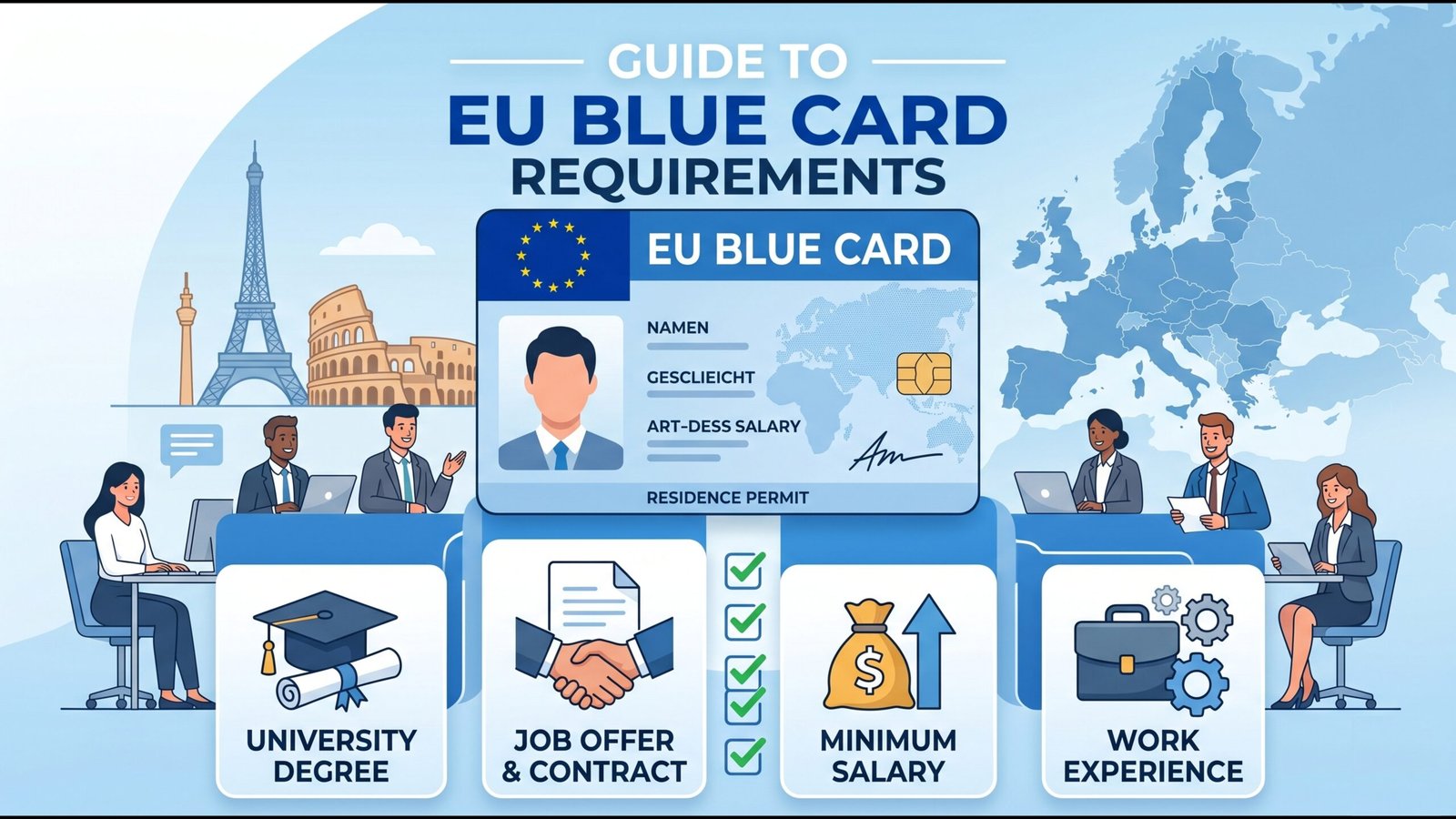
The EU Blue Card is a premium work visa for highly skilled professionals. For 2026, the standard salary threshold is €45,300, while IT/MINT and new graduates only need €41,041.80.
If you are a highly skilled professional outside the European Union looking to build a long-term career in Europe, the EU Blue Card Germany is the absolute gold standard of work visas.
Introduced to attract top global talent, the Blue Card is a specialized residence permit that offers significant advantages over a standard work visa—including incredibly fast pathways to permanent residency and easy family reunification.
What is the EU Blue Card?
The EU Blue Card is a work and residence permit for non-EU nationals. While it is an EU-wide initiative, Germany issues the vast majority (over 80%) of all Blue Cards in Europe.
- Fast Permanent Residency: Settle in Germany permanently in 21-27 months.
- Family Benefits: Spouses get immediate, unrestricted access to the job market.
- Mobility: Move to another EU country after 12 months.
EU Blue Card Germany Requirements
To be eligible for an EU Blue Card in Germany, you must fulfill three main criteria:
- Recognized Degree: A university degree comparable to a German higher education degree. (IT specialists with 3+ years experience can skip this!).
- Concrete Job Offer: A contract from a company based in Germany.
- Salary Threshold: The job must meet the legally mandated minimum salary.
EU Blue Card Salary Threshold 2026
The minimum salary for the EU Blue Card in Germany is adjusted annually. For 2026, the limits have been kept accessible to attract talent.
How Long to Permanent Residence?
One of the biggest draws of the Blue Card is the accelerated path to permanent residency (Niederlassungserlaubnis).
Months with A1 German
If you maintain basic German skills (A1 level), you can apply for PR after 27 months.
Months with B1 German
If you can prove intermediate German skills (B1 level), the wait is reduced to just 21 months!
Step-by-Step Application Process
- Secure a Job: Apply for English-speaking jobs in Germany and secure a contract that meets the salary thresholds.
- Degree Recognition: Print your degree’s recognition status from the Anabin database.
- Apply at the Embassy: If you are outside Germany, apply for a national visa (Type D). If you are already in Germany on another valid visa (like the Opportunity Card), you can apply directly at your local Ausländerbehörde.
- Enter and Register: Enter Germany, register your address (Anmeldung), and convert your entry visa into the actual physical EU Blue Card at the immigration office.
Frequently Asked Questions
Can I bring my family to Germany on a Blue Card?
Yes. The EU Blue Card offers excellent family reunification benefits. Your spouse and minor children can join you in Germany. Importantly, your spouse does not need to prove German language skills before arriving and receives unrestricted access to the German job market from day one.
What happens to my Blue Card if I lose my job?
If you lose your job, you do not have to leave Germany immediately. You must notify the Ausländerbehörde (immigration office) right away. They will typically grant you a 3 to 6-month grace period to find a new job that meets the Blue Card requirements.
Am I tied to my employer with an EU Blue Card?
Only for the first 12 months. During your first year, you need permission from the immigration office to change jobs, and the new job must still meet the Blue Card criteria. After 12 months, you are free to change employers without prior approval, provided the new position still meets the minimum salary threshold.
Continue Your Germany Journey
Ready to take the next step? Explore our guides on finding work and getting settled: